Showing posts with label funds. Show all posts

Sunday, August 4, 2019

What's Different Between Roth IRA vs. Roth 401(k)?

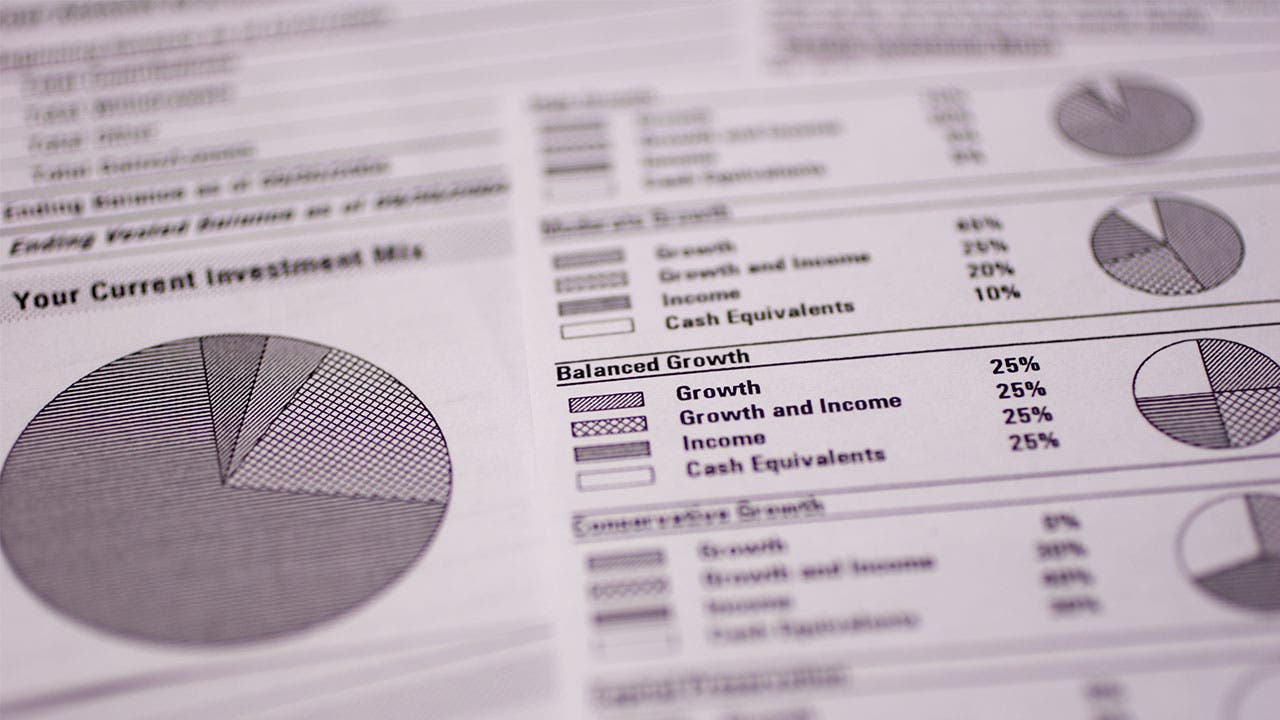
Investment paper statement

jondpatton/Getty Images

A Roth 401(k) and a Roth IRA sound similar — and they are.

Contributions are made after taxes — meaning your taxable income isn’t reduced by the amount of your contributions when you file your taxes. But you get a tremendous tax advantage down the road, since earnings can be taken out tax-free at age 59 1/2.

Roth IRA and a Roth 401(k): 6 differences

However, the Roth 401(k) has a few key differences from the Roth IRA. Here’s what to know before deciding which account is right for you.

1. Contribution and income limits

The most distinguishing characteristic of 401(k)s, whether Roth or traditional, is the high contribution limit, allowing employees to save up to $19,000 per year in 2019. For workers over 50, the ceiling is $25,000.

Meanwhile, IRA contribution limits are $6,000, and workers over 50 may contribute up to $7,000 per year.

There are, however, income limitations for Roth IRA contributions. If your modified adjusted gross income in 2019 is $203,000 or more for married couples filing jointly or $137,000 or more for single filers, the accounts are off-limits.

There are no income limits on Roth 401(k)s.

2. Distributions

A benefit of the Roth IRA is that the account can exist, essentially, forever without any minimum required distributions.

A benefit of the Roth IRA is that there is no requirement to start taking distributions while the account holder is still alive.

Should the account holder pass away, only their spouse won’t be required to take distributions or pay taxes. Anyone other than their spouse who is listed as a beneficiary will be required to withdraw a minimum amount each year.

3. The match in a Roth 401(k)

Besides their high contribution limits, Roth 401(k)s have another advantage: The worker’s contributions can be matched by the employer up to a certain percentage. It’s essentially free money from the employer, on top of the employee’s elective deferrals.

However, if you are contributing to a Roth 401(k), your employer’s match will be placed into a traditional 401(k).

“The employer part never reaches you, so it can’t be done on an after-tax basis,” says Dean Barber, founder and CEO of Barber Financial Group.

For workers who divide contributions between a regular 401(k) and a Roth 401(k), the company match will be applied to the traditional 401(k).

4. Investment options

A Roth IRA allows investors a great deal more control over their accounts than a Roth 401(k). Investors can choose from the universe of investments for their own accounts, including individual stocks and bonds, but are limited to the funds their employers offer in a 401(k) plan.

Depending on their plan’s investment menu, employees might be better off maximizing the match from their employer and then funneling extra retirement dollars into a Roth IRA. That way they can take advantage of better investment options if the fund lineup is too limited in the employer’s plan.

Also check the expense ratios of the funds in your Roth 401(k) plan. The lower the expense ratio, the higher your return. Investors paid an average of 0.52 percent for their mutual funds and exchange-traded funds in 2017, according to Morningstar Research Services’s most recent data. If the funds in your 401(k) plan run higher than 1 percent, strongly consider investing in a Roth IRA.

5. Income limits

Roth IRA contributions are off-limits if your modified adjusted gross income in 2019 is $203,000 or more for married couples filing jointly or $137,000 or more for single filers.

Meanwhile, there are no income limits on Roth 401(k)s.

6. Rules for early withdrawals

Withdrawals from both Roth 401(k)s and Roth IRAs are tax free if they meet certain criteria:

  • The accounts must be held for at least five years.
  • Distributions are made in the event of disability or death or the account holder reaches age 59 1/2.

You can always take out the money you contributed to either Roth account without tax repercussions. But if you want to take out earnings as well as contributions early without paying taxes or an early-withdrawal penalty, you generally would have to take out a loan with the Roth 401(k) if the plan permits.

With a Roth IRA, you can withdraw up to $10,000 to buy, build or rebuild a first home and avoid paying taxes and the 10 percent early withdrawal penalty even if you are under age 59 1/2.

You can have a Roth IRA and a Roth 401(k)

Yes, it is possible to have both a Roth IRA and a Roth 401(k) at the same time. However, keep in mind that a Roth 401(k) must be offered by your employer in order to participate.

If you don’t have enough money to max out on contributions to both accounts, it’s recommended to max out the Roth 401(k) first to receive the benefit of a full employer match.

Roth IRA or Roth 401(k): Which is better?

Determining which account will best suit your needs depends on your current and future financial situations, as well as your own specific goals.

High earners who want to make contributions to retirement accounts each year should consider a Roth 401(k), because they have no income caps. Additionally, individuals who want to make large contributions can make almost three times the amount in a Roth 401(k) rather than a Roth IRA.

Those who want more flexibility with their funds, including no required distributions, might lean toward a Roth IRA. This would especially be helpful if you want to leave the account to an heir.

Saving for the future is important. Not sure where to start? Use Bankrate’s retirement calculators to explore your options for investing in your future.


How Do You Open a Roth IRA?

Woman at home working on her laptop

Don’t want to be a pauper in your old age? Consider opening a Roth IRA. While you don’t get immediate tax gratification as you do in other types of retirement accounts, you end up with tax-free growth and will never have to pay any taxes if you follow the rules.

A Roth IRA is not an investment. David Littell, professor of retirement income at The American College of Financial Services, says that is one of the biggest myths of retirement savings and he hears it all the time.

“The Roth is just a tax vehicle that you can set up with a financial institution,” he says. “You still have to pick the underlying investments, which can be mutual funds, a self-directed brokerage account or an annuity product.”

“The Roth IRA is just the ‘protective shield’ that keeps money in a tax-advantaged bubble,” says Greg McBride, CFA, Bankrate’s chief financial analyst.

Roth IRAs are most commonly funded with stocks, bonds, mutual funds, exchange traded funds or ETFs, and money market funds.

How do I qualify for a Roth IRA?

The sooner you start a Roth IRA the better. But the fact is, you need to be old enough to earn an income and your income cannot exceed certain limits.

Underage kids can contribute to a Roth IRA, as long as they have income — perhaps a lawn-mowing or snow-shoveling business. They will need a parent or another adult to open a custodial Roth for them and document their earnings. Contributions cannot exceed the lesser of their earned income or the $6,000 contribution limit. Parents or grandparents can actually contribute the amount of a child’s earnings to a Roth IRA as a gift. When the child reaches adulthood (age 18 or 21, depending on the state), the monies in the custodial account can be transferred into a Roth account in his or her own name.

At the other end of the age spectrum, you’re never too old to invest in a Roth. Even if you’re in your eighties or nineties, you can contribute to a Roth as long as you’re still earning money.

A big plus is that while you are never forced to take withdrawals from the Roth IRA during your lifetime, you generally can always withdraw the contributions if you need to.

How to set up a Roth IRA

The IRS stipulates that an account or annuity must be designated as a Roth IRA when it is opened. You can open a Roth account online or in person at any number of places — mutual fund firms, discount brokerages, full-service brokerages, financial planning firms and robo-advisers, to name a few. Bankrate’s Brokerage Reviews provide thorough analyses of the services available at many of the bigger players.

But before you consider where to open an IRA, the first step is to determine whether you want to select investments for the Roth yourself or if you’d rather hire someone to do this for you.

“When you’re talking about younger people, there are do-it-yourselfers, there are people who want investment advice, and there are people who want more comprehensive financial advice,” says Littell.

A young person saddled with student loans or a young married couple with children may need financial planning with a credentialed adviser, such as a certified financial planner professional. A financial adviser can also help an individual who may have trouble staying on course when the market suddenly drops.

“For young people who just need investment advice, you’d be crazy not to consider low-cost advice to help you with asset allocation,” Littell says.

Such advice abounds on the internet for free. You can spend a couple of hours determining the right mix of investments — also known as asset allocation — for your age, time horizon and risk tolerance, or simply select a target-date fund, which has an asset allocation mix suitable for your age and is designed to become progressively more conservative as you reach retirement age. The target date can be 10, 20 or 40 years into the future, ideally the time when you expect to begin taking withdrawals.

Thousands of advisers and financial institutions are vying for your dollars, but it’s not rocket science to get started. It’s a matter of your knowledge level and personality style, Littell says. “The more you want to be hands-off, the more you probably need an adviser. Robo-advice is not so hands-off.”

But robo-advisers are marketed as hands-off investment options. Robo-advisers are automated online investment portfolio services that generally charge a smaller fee than you would pay for human advice. Management fees range from nothing at all to 0.50 percent of assets or more, and while some robo-advisers do not require a minimum balance, others require a hefty one. The ones that require a hefty balance also generally provide human advice if needed.

Where to open the Roth Account

Step two of how to open a Roth IRA is to determine where you will open your Roth account. Look for a firm that offers commission-free (or no-load) mutual funds or ETFs and charges no fees for account maintenance, initial investments or account transfers.

Competition among brokerage houses has resulted in lower fees for stock trading. But this should not be a big priority for young people. “Novice investors should avoid trading stocks and instead invest in broad-based, low-cost index funds, and do so on a commission-free platform,” says McBride.

Littell says to check the reviews at the various financial entities you’re considering. “Also, consider what types of education they can offer and tools, like calculators and other useful tools. And consider fees.”

Choosing investments for a Roth IRA

Step three of how to open a Roth IRA is choosing the investments for it. Even if you do hire an adviser, you should review the investment recommendations and inquire about fees.

Whether you are a do-it-yourselfer or a delegator, you will almost always pay an expense ratio for the fund or ETF you choose. Advisers generally charge a fee on top of that.

According to Morningstar, the average expense ratio for an index fund is 0.66 percent, versus 1.03 percent for an actively managed fund, run by a fund manager whose intent is to beat the market. Few managers can sustain market-beating returns over the long term.

“The less an investor pays in fees, the more money that stays in the account,” says Bankrate’s McBride. “Higher fees do not translate into better performance and are a handicap to achieving it. There’s nothing wrong with choosing low-cost index mutual funds or ETFs.”

Low-cost index funds that mimic the stock market make the most sense for young investors just starting out. Vanguard, which manages $4.2 trillion in assets, is known for its lineup of low-cost index funds, but competitor Fidelity Investments, with $1.4 trillion of assets under management, also offers cheap index funds, including four with a 0% expense ratio and no minimum investment requirement.

How much interest will I earn on Roth IRA?

“What you earn in your Roth IRA will depend on the investments you choose within it,” says McBride.

Littell’s advice to younger people is to invest primarily in stock funds. “The longer your investment horizon, the more risk you can afford to take. So we encourage younger people to have a higher allocation to equities.”

But how much you earn has as much to do with how much you pay in fees as it does in how your investments perform. Because annual asset management fees are deducted from your account balance, it will affect how much you accumulate in assets. By the same token, you will accumulate more money if the investment performs well and less if it does poorly.

The table below illustrates the difference that a 1 percentage point in return can make in how much an investor accumulates after contributing $500 a month to a Roth IRA for 30 years. That percentage point loss can be attributed to higher expenses or to subpar returns due to choosing a poorly performing investment.

Portfolio return Assets accumulated after 30 years* 5% $417,863 6% $504,769 7% $613,544

* Assumes $500 monthly payments were made at the beginning of each month for a period of 30 years.

 How much money do I need to open a Roth IRA?

Different firms require different minimum investments, but many will waive them if you set up automatic monthly contributions. This is smart to do because once you set this up, you don’t have to think about it except maybe once a year, when you might increase the investment amount if the IRS raises the contribution limit. Your account will automatically build over time, and you will effectively be paying yourself first.

Because the 2019 contribution limit is $6,000, that’s the most you can contribute over the course of a year. If you can afford to contribute $500 a month, you will reach the limit after 12 months. You have until mid-April, then taxes are due, to invest in an IRA for the previous calendar year. For example, you can make contributions for the 2019 tax year right up to April 15, 2020.

Of course, if you can’t contribute $500 a month, contribute what you can. In the end, Littell says, “contribute and invest over the long haul and investors will get gobs of tax-free growth.”

Learn more:

Home Equity Loan Vs. Line of Credit Calculator

Tap into the value you have in your home to get the funds you need.